Saturday, 1 June 2019

Paleo-autochtonous species (4): Avicennia


One black mangrove (Avicennia germinans) recently established grows in the middle of a brackish swamp north of St. Augustine, Florida, near the northern border of this cold-sensitive tropical tree. Mangroves are expanding in northern Florida as the episodes of intense cold become rarer. Photograph: Kyle C. Cavanaugh (Landsat Satellite Sees Florida Mangroves Migrate North)


I evoked in a previous article (Ecosistemas terciarios desaparecidos), the presence of mangroves on the southern coast of the Iberian peninsula at the end of the Tertiary and early Quaternary, documented by the discovery of extraordinarily well preserved fossils whose study is still underway (Hallados fósiles de manglares de hace 2,5 millones de años en Cuevas). Based on this I imagined, in another more recent article (Rumbo al Plioceno), as in the future more or less distant the Romería del Rocío possibly have to progress in boats between the roots of the mangroves. In writing this article, however, I was not aware that the possibility of seeing a mangrove grow on our coast may not be as far as I expected...


Current distribution of Avicennia germinans


As you can see in the previous map, the black mangrove (Avicennia germinans) reaches in North America the eastern shores of Florida. The northern boundary of its distribution does not seem to be so marked by average annual temperatures or rainfall, but by the fact that there are cold days when the temperature falls below -4 ° C. Below this temperature, black mangrove seedlings do not survive. On the other hand, a relatively recent study [1] has shown that global warming has led to the development of the mangrove swamp in the north since the 1980s, where the tree colonizes coastal areas.


As you are intelligent and have agile minds, you have surely noticed seeing the map of distribution of this species that the north of Florida is situated at about the same latitude as the Canaries. And as you well know, the Gulf Stream flows southward off the coast of North America, bringing cold waters from the north, and rising northward off the coasts of Africa and Europe. In addition, there are many areas of southern Spain, where temperatures do not drop below 0 degrees. Huelva, for example, is often the city of Spain with the highest minimum temperature. The cold ever in this city was -5.8 degrees and was achieved in 1938. Later, it only reached that limit of -4ºC in 1954. The big question, you guessed it, is this: could the black mangrove survive in southern Spain? As far as I know, no one happened to try to plant this species in our country, but seeing that the climatic limitation marks the limit of its distribution in Florida, I wonder if perhaps the experiment is worthwhile, although only to clear the doubts. In the worst case we would have a small mangrove swamp on our coast...


Potencial distribution of Avicennia germinans suposing that this species is able to survive in zones where frost is exceptional. Author: Joâo Ferro.


AvicenniaFamily: AcanthaceaeOrder: Lamiales

Shrubs or trees, maritime. Branches terete, sometimes 4-ridged when young. Leaves opposite. Inflorescences small spikes or capitula; bracts and bractlets ovate, shorter than calyx, persistent. Flowers small, opposite, sessile. Calyx cup-shaped, deeply 5-lobed; lobes overlapping, persistent. Corolla nearly actinomorphic, campanulate, shortly inserted on an inconspicuous disc; lobes 4 or 5, upper lobe often broader than others. Stamens 4, adnate to apical part of corolla tube. Ovary imperfectly 4-locular, with a free central winged placenta; ovules pendulous. Capsules subtended by persistent calyx, dehiscent into 2 leathery valves.

Description: Flora of China


The presence of this genus on the European continent and in the Mediterranean is documented until the beginning of the Quaternary. Apparently the mangroves survived longer in the eastern Mediterranean basin, disappearing less than 2 million years ago around the Black Sea.


Latest records of Avicennia mangroves in the Mediterranean [2]


I did not live in Madrid, far from the sea and not have a holiday in very favorable areas, I do not think I would hesitate to try. The region of Huelva seems a priori to be the most favorable, but I have to admit that I do not know this region very well. Can you imagine how extraordinary it would be to have a small mangrove swamp on our coast? Not only for the curiosity but also for the multiple benefits that this type of ecosystem brings where it develops. Everyone probably knows that the mangroves are authentic nurseries for many species of fish. There is no doubt in my mind that such an initiative would quickly come to an end, with initial reluctance, the unconditional support of many people. Yes, the idea is launched. I hope that in this country people are even more insane than those who write these lines...


[1] Cavanaugh K. C. et al. (2014) / Poleward expansion of mangroves is a threshold response to decreased frequency of extreme cold events / PNAS, Vol. 111(2), pp. 723–727
[2] Biltekin, Demet. (2010) / Vegetation and Climate of North Anatolian and North Aegean Region Since 7 Ma According to Pollen AnalysisTésis / Tésis / Université Claude Bernard – Lyon 1 & Université Technique d'Istanbul


Author: Adrián Rodríguez
Translation: João Ferro


Tuesday, 23 April 2019

Paleo-autochtonous species (3): Gleditsia

When autumn arrives in the Parque del Retiro in Madrid and the deciduous trees begin to lose their leaves, stands out among them a tree of very different size from its neighbors and whose branches armed with dissuasive thorns hang enormous dark legumes that soon end up covering the soil at the foot of the tree. The nature of the fruit suggests that it is a legume, but this tree belongs, however, to an essentially tropical subfamily, of which there are very few representatives in temperate cold areas. The honey locust (Gleditsia triacanthos) and the Kentucky coffeetree (Gymnocladus dioicus) are, in fact, the only species of the subfamily of the Cesalpinioideae grown in our country that truly support the cold. Both species share some characteristics that are characteristic of this subfamily, such as bipinnate leaves and the presence of glands (extrafloral nectaries) on the rachis of the leaves and leaflets, the actinomorphic flowers, etc. Unlike most species of this subfamily, however, both species have unisexual flowers. The acacias also belong to this subfamily, but are not as resistant to the cold as these two species.


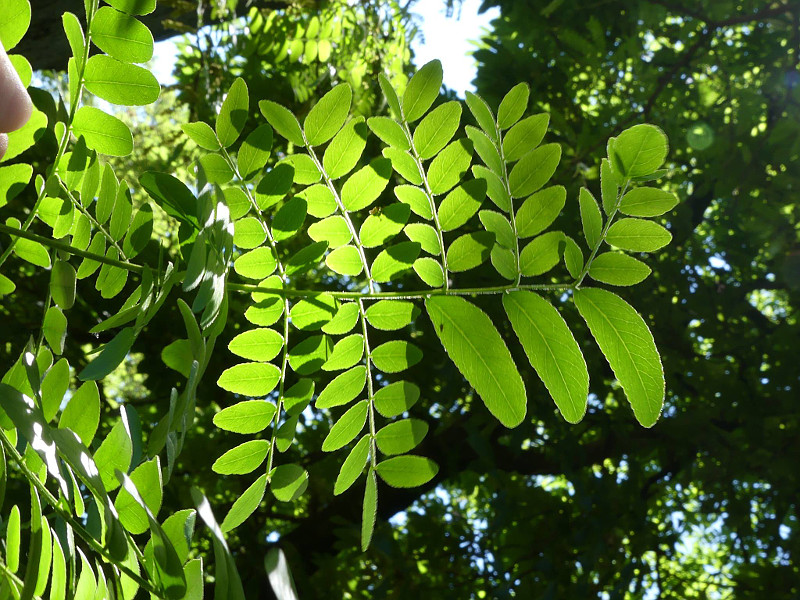
An interesting feature of the Geditsias is that the same individual may have pinnate and bipinnate leaves or, as can be seen in this photograph, exceptionnally have partially pinnate and bipinnate leves. This leaf belongs to Gleditsia sinensis (Royal Botanic Gardens of Madrid).


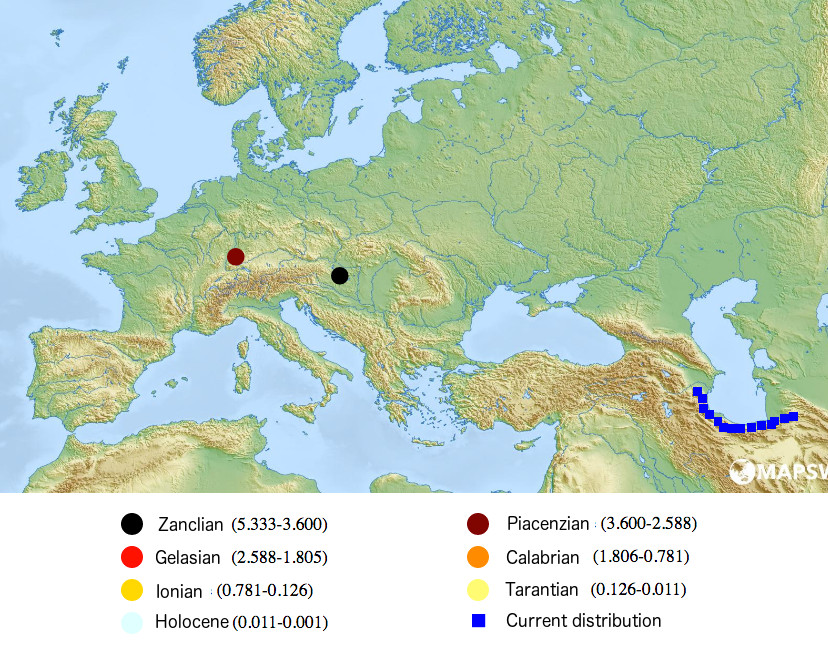
The genus Gleditsia, composed of about 14 species, is another clear example of taxon with disjunct distribution area, with 3 species present in the Americas and all the others in Asia. One of these species is present in the southern Caspian Sea and this allows us to intuit that this genus was probably present throughout the Northern Hemisphere before the glaciations. As shown in the map below, there is little fossil evidence of this kind in the Pliocene or in the European Pleistocene, and these are not sufficient to know its spatial and temporal distribution. But it confirms, however, that the genus had a holarchic distribution before the ice ages. The return of this genus to the European continent, curiously, was not made from its stronghold in the basin of the Caspian Sea, but of the American continent. The honey locust (Gleditsia triacanthos), originally from a large area of North America, it is now naturalized in much of the European continent. It is even even cultivated in the area where the Gleditsia caspica originates and it is verified that both species hybridize very easily. A recent study (1) conducted in Azerbaijan has shown that even in nature reserves many of the observed individuals are already first-generation hybrids. This example shows that despite the long time that both species have separated, the speciation process has not yet succeeded in preventing or hindering the crossing of the different strains of this genus.


The honey locust is an interesting case of an orphan species. Provided with dissuasive spines on a large part of its trunk and its branches, it produces fruits with a sugar pulp highly appreciated by herbivores, it is very interesting to note that there is currently no herbivore species that preferentially feeds on its fruits or leaves and which actually co-evolved with this species. In North America, it is suspected that they are probably elements of the recently disappeared megafauna, such as giant sloths, which ate their fruits and contributed to spread the seeds (2). In Europe, it is not so clear what kind of herbivore it would interact with, although observations in Argentina suggest that other large herbivores could also have fed on their vegetables. Livestock in this region are the main contributors to the spread of this species.


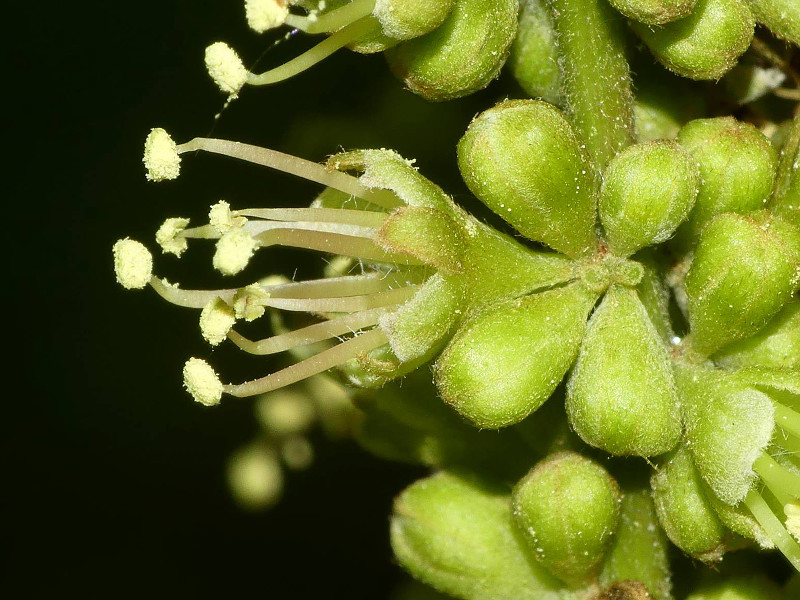
Male flower of Gleditsia sinensis (Royal Botanic Garden of Madrid). The flowers are actinomorphic. Petals and sepals are very similar to each other.


GleditsiaFamilia: FabaceaeOrden: Fabales

Trees or shrubs, deciduous. Trunk and branches usually with stout, simple or branched spines. Leaves alternate, often clustered, simply paripinnate and bipinnate often on same plant; stipules caducous, small; rachis of leaves and pinnae sulcate; leaflets numer­ous, subopposite or alternate, base oblique or subsymmetrical, margin serrulate or crenate, rarely entire. Inflorescences axillary, rarely terminal, spikes or racemes, rarely panicles. Flowers polygamous or plants dioecious, light green or greenish white. Receptacle campanulate, outside pubescent. Calyx 3-5-lobed; lobes subequal. Petals 3-5, slightly unequal, ca. as long as or slightly longer than calyx lobes. Stamens 6-10, exserted, slightly flat, broad, with crisped hairs from middle downward; anthers dorsifixed. Ovary sessile or shortly stalked; ovules 1 to numerous; style short; stigma terminal. Legume ovoid or elliptic, flat or subterete.

Description: Flora of China


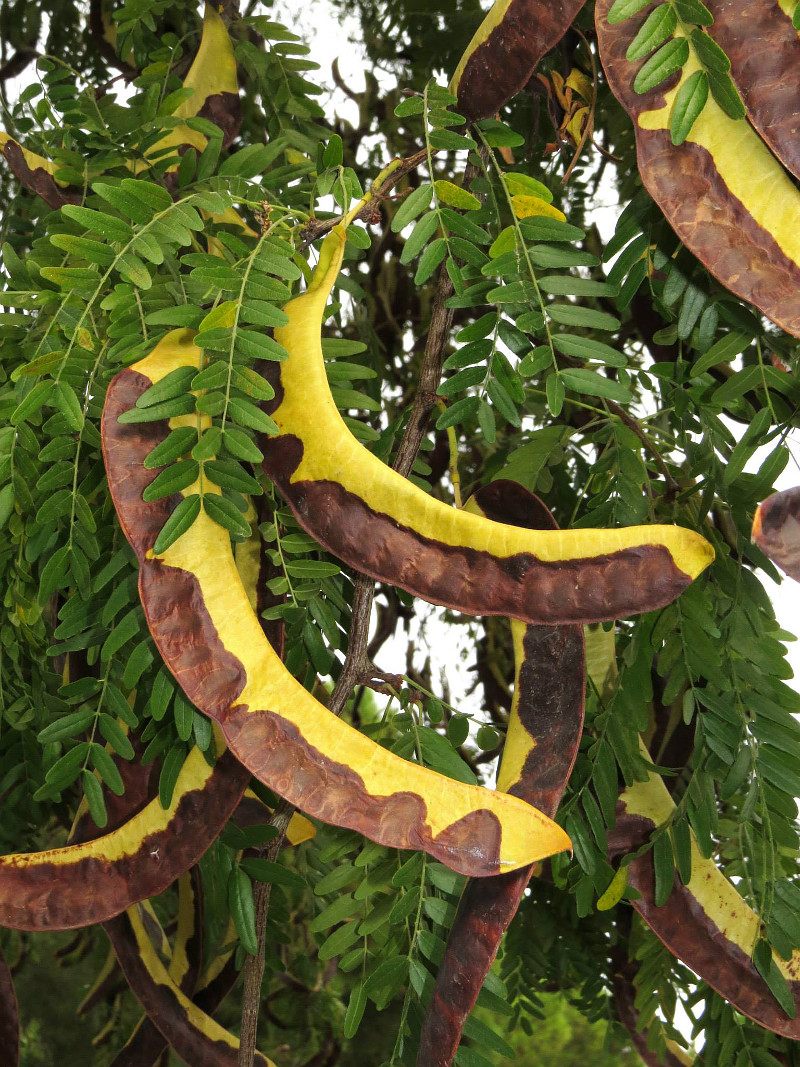
Legumes of Gleditsia triacanthos in the Park of Retiro (Madrid).


Species cultivated in our parks for a long time and from which also developed a variety without thorns. It seems, however, that its classification as an invasive species condemns for now this species to stop being used as an ornamental tree. Its wide naturalization, however, guarantees for the moment its survival in our flora.


(1) Schnabel1 A. & Krutovskii K. (2004) / Conservation genetics and evolutionary history of Gleditsia caspica: Inferences from allozyme diversity in populations from Azerbaijan / Conservation Genetics, Vol.5, pp. 195–204, 2004
(2) Whit Bronaugh (2010) / The Trees That Miss The Mammoths / American Forests (Winter 2010 issue)


Author: Adrián Rodríguez
Translation: João Ferro

Green denialism

A couple of years ago I started a small experiment in a small wasteland in my neighbourhood with the intention of checking whether some of t...