Showing posts with label paleo-autochtonous. Show all posts

Friday, 5 July 2019

Paleo-autochtonous species (6): Pterocarya


One of the tree families that suffered the most from the effects of Quaternary glaciations on the European continent is, without a doubt, that of the Juglandacea. Although one species - the walnut - managed to survive in the southern peninsulas and another - the one we are dealing with in this article - is only present in the Caucasus, on the periphery of the continent. This family had a rich diversity of species before the ice ages with genera such as Juglans, Carya, Pterocarya, Engelhardia, Platycarya, Cyclocarya, etc. Many of these genera only survived later in the Asian SE and in North America, disappearing completely from the European continent. The most thermophilic species disappeared (at the end of the Pliocene), with only the two currently present genera (Juglans, Pterocarya) and the Carya genus remaining in our continent, which survived in the Iberian Peninsula until the middle Pleistocene and until much more recent dates still in Anatolia.


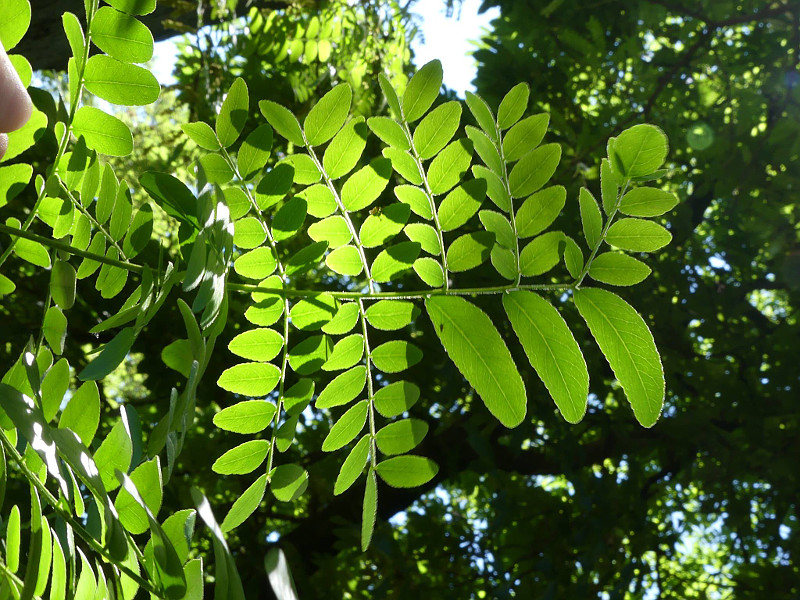
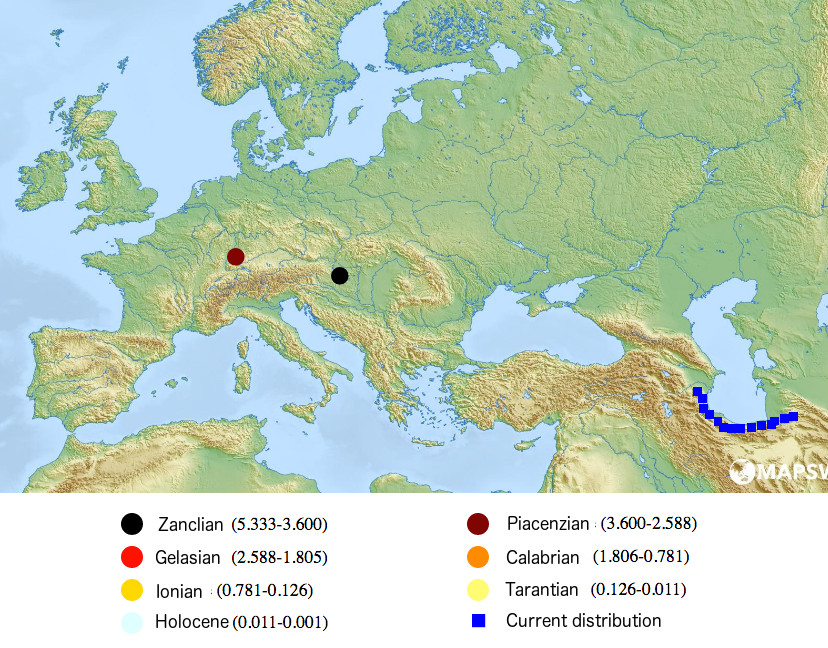
The Caucasian pterocaria (Pterocarya fraxinifolia) is a species present in the W of the Black Sea, the Caucasus and the N of Iran, with some dispersed and isolated populations in Anatolia and other southernmost points of Iran. It is a thermophilic species with high demands on humidity, riparian forests being its natural habitat. As you can see on the map below, the Caucasian pterocaria was a widespread species throughout the European continent at the beginning of the Quaternary (Lower Pleistocene). It was also very abundant, being in many places the dominant species in the pollen spectrum.


Although this species was considered extinct in the Iberian Peninsula since the Middle Pleistocene, the lake record of the El Cañizar lagoon, analyzed by Eduardo García-Prieto Fronce (1), has shown that this species survived in the E of the Iberian Peninsula until the last interglacial period (Eemiense), possibly until 67,000 years ago. The warming suffered by a good part of the European continent for several decades favors, today, clearly this species that has already become naturalized in some regions in which, cruel paradox of fate, is considered invasive.


PterocaryaFamily: JuglandaceaeOrder: Fagales

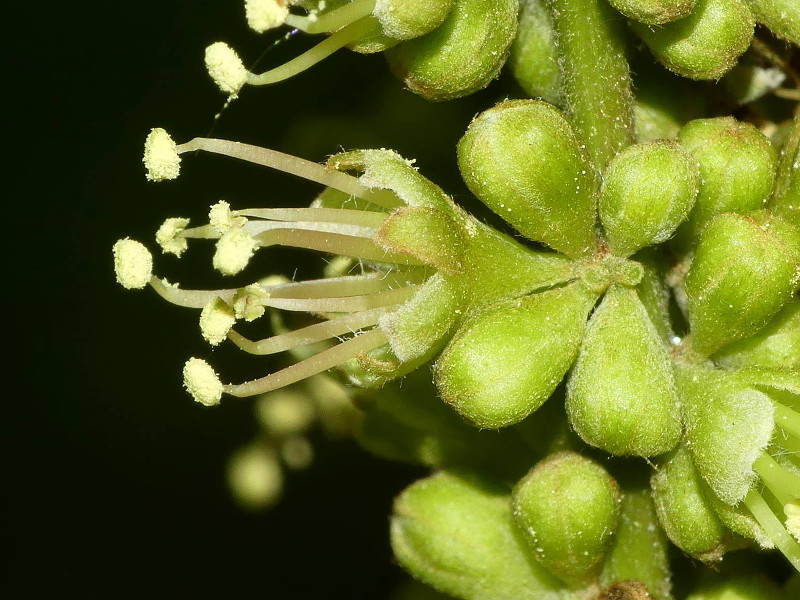
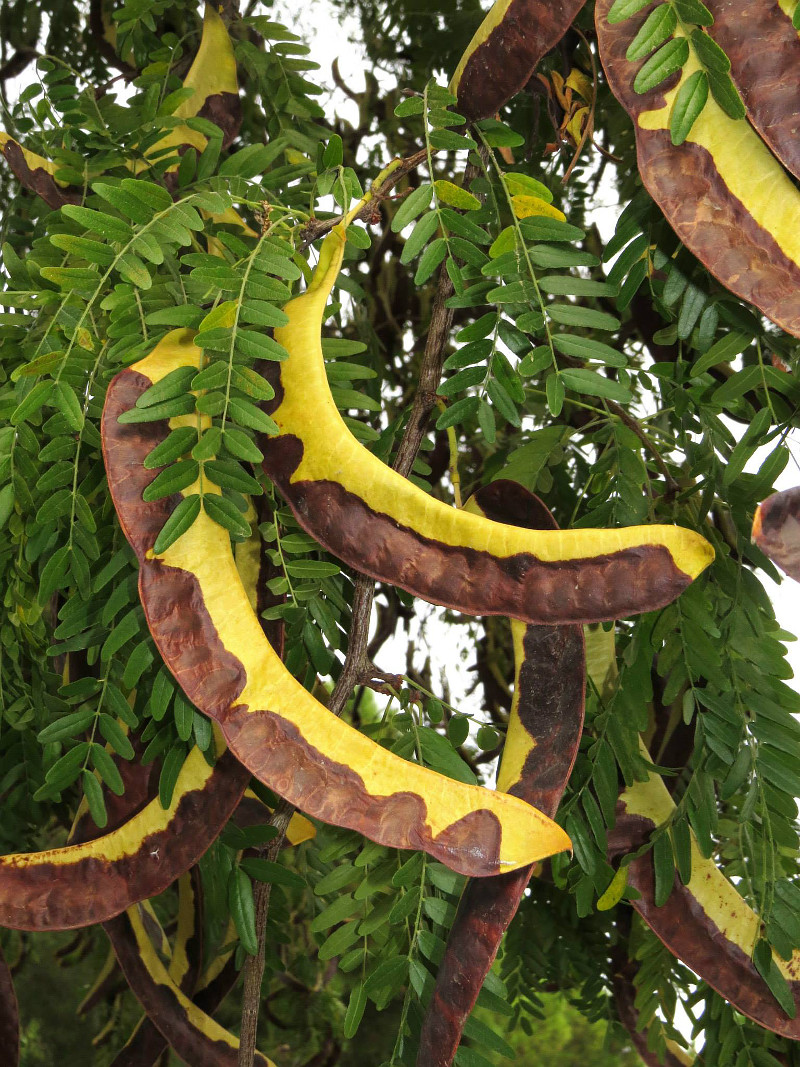
Trees deciduous, monoecious. Branchlets with chambered pith. Terminal buds oblong, naked, or with 2-4 overlapping scales. Leaves odd- or even-pinnate; leaflets 5-21(-25), margin serrate. Inflorescences lateral or terminal on old or new growth, pendulous; male and female inflorescences separate: male spike solitary, lateral on old growth or at base of new growth; female spike terminal on new growth. Male flowers with an entire bract; bracteoles 2; sepals 4; stamens 5-18, anthers glabrous or pubescent. Female flowers with a small, entire bract, adnate to ovary but nearly free at base; bracteoles 2, adnate to ovary but nearly free above bract on posterior side; sepals 4, adnate to ovary, free at apex; style short; stigmas carinal, 2-lobed, plumose. Fruiting spike elongate, pendulous. Fruit a 2-winged nutlet, 4-chambered at base. Germination epigeal.

Description: Flora of China


It is a relatively uncultivated species. Most of the pterocarias grown in our country belong to the eastern species (P. stenoptera) or to the hybrid of both (P. x rhederiana). According to the catalog published by the Madrid City Council, 347 specimens of this species were planted in the Madrid Río project, but I am not sure that they really correspond to this species (it will have to be verified in situ). Its cultivation does not seem to involve many difficulties. The region from which it originates has a sub-Mediterranean type climate very similar to ours and if the water requirements of this species are met, it should thrive without much difficulty. Its propagation by seeds does not seem too problematic. Without any previous treatment (except to preserve the seeds on the terrace), I managed to germinate three seeds and I have high hopes of achieving the development of the obtained specimens..


(1) Eduardo García-Prieto Fronce (2015) / Dinámica Paleoambiental durante los últimos 135.000 años en el Alto Jiloca: el registro lacustre de El Cañizar / Tésis Doctoral, Universidad de Zaragoza


Author: Adrián Rodríguez
Translation: João Ferro


Wednesday, 5 June 2019

Paleo-autochtonous species (5): Cedrus


Cedar of "La Francesa", in the region of Béjar (Salamanca). It is undoubtedly one of the most imposing Atlas cedars in the Iberian Peninsula, in a region where this species was probably still present in the Holocene.


The quaternary glaciations were a real catastrophe for the continent's biodiversity, and its tree flora greatly impoverished during this period. The cedars, so common today in our parks and gardens, belong to a genus that was one of the last to disappear from the continental zone of the European continent. A single species, relictual, was able to survive on the island of Cyprus (Cedrus brevifolia), being this species the last representative of this type in Europe.

Origin and expansión

Confined now to the mountains of North Africa, southern Turkey, the Middle East and the Himalayas, the origin of this genus is found in East Asia, as shown by phylogenetic studies (1) and fossil evidence. From there, it expanded to the west, differentiating firstly the Himalayan cedar. After colonizing the whole south of the European continent, an eastern population was differentiated from which the cedar of Lebanon and the cedar of Cyprus would be born and a western population reaching North Africa through the Iberian Peninsula when the Strait of Gibraltar was closed in the Yonger Miocene (Messinian).


It is interesting to note that the differentiation of cedar, a result of the isolation of different populations, does not prevent the crossing of different species, which often makes it difficult to identify the individuals planted in our parks, which may be the result of the crossing of several of these species . This process of differentiation seems to be quite old in any case, prior to the glaciations. At the end of the Pliocene, the cedar (sensu lato) was present in all reliefs from the south of the continent, from the Iberian Peninsula to the Caucasus.


Regression and possible refuges

Cedar was already at the end of the tertiary, an average elevation tree that coexisted in many places now missing with conifers as Tsuga and Cathaya. These species took refuge during the glaciations, in the peninsulas of the south of the European continent. Its presence is commonly accepted in the Italic Peninsula and in the north of the Iberian Peninsula until the Middle Pleistocene. The presence of cedar pollen in more recent sediments is generally attributed, however, to wind transport from North Africa. The detailed study of some recent pollen diagrams suggests, however, that cedar could be present in the Peninsula until much later dates.


Pollen diagram of deposit of Cuerpo de Hombre (Sierra de Gredos). Notice in particular the simultaneous decline of the pine and the cedar at the moment when man arises.


A recent study in postglacial sediments of the Sierra de Gredos [2] reveals the more or less continuous presence of cedar in one of the analyzed profiles, which is hardly explained by a contribution from the North African wind. The pollen diagram of this profile (Cuerpo de Hombre) shows that the emergence of cedar always coincides with periods when the tree cover reaches a maximum, as reflected by the pine curve. The disappearance of the cedar, on the other hand, coincides with the disappearance of the pine at the time when the forests of this region were overthrown and that these lands completely changed of use. A more random presence of cedar would have been more compatible with wind transportation. The most convincing argument in favor of a local origin of this pollen, however, is its total absence in the other profiles studied in this same region. It seems very improbable that after a journey of several hundred kilometers, the cedar pollen appears "concentrated" in a single profile. Anyone who has experienced an episode of "desert dust" knows perfectly well that when this happens, the desert sand covers vast expanses indiscriminately.


A ski resort in the Pyrenees on a desert dust day last April (2018) / Photography: https://twitter.com/hashtag/lluviadebarro


A very similar situation is observed in other regions. In Andalusia, for example, cedar pollen appears in significant quantities in sediments at the Bajondillo grotto (Torremolinos), where it has a continuous presence in the pollen diagram until the end of the last glacial period, coinciding with the emergence of the Aleppo pine [3]. Here again, it seems that it is not the result of mere coincidence. But in the same way is the total absence of the cedar in the sediments of the same time in the cave of Gorham (Gibraltar), only to 60 km more to the west, what is more remarkable in the context of a contribution by the wind. It should be noted that the cedar itself is present in this same deposit in older sediments (Upper Pleistocene).


Pollen diagram of the cave del Bajondillo (Torremolinos). Note the simultaneous development of Abies, Betula and Cedrus at the end of the last ice age.


This heterogeneity of cedar presence in Upper Pleistocene and Holocene sediments is explained much more easily by the presence of small Cedar populations in the Iberian Peninsula. Its disappearance, as shown by the Sierra de Gredos example, would have been very recent and the man apparently has a clear responsibility because the species has not survived to this day. This will only be definitively demonstrated on the day that Holocene macrorrests are found attributable to this species. For now it is only a suspect, but the evidence clearly indicates that it would be present. For now, as far as I know, no one has explained the absence of the cedar in all places near and contemporaneous with those in which its presence was revealed.


CedrusFamilia: PinaceaeOrden: Pinales

Trees evergreen, monoecious; branchlets strongly dimorphic: long branchlets growing several cm each year and bearing very slow-growing, lateral short branchlets; winter buds small, scales persistent. Leaves spirally arranged and radially spreading on long branchlets, shorter and very densely clustered on short branchlets, needlelike, triangular or ± quadrangular in cross section, stiff, stomatal lines present both adaxially and abaxially, most numerous abaxially, vascular bundles 2, almost fused, resin canals 2, small, marginal. Cones borne on apex of short branchlets, solitary, erect. Pollen cones with many spirally arranged microsporophylls; microsporangia 2; pollen not saccate. Seed cones erect, light purple at fertilization, maturing in 2nd(or 3rd) year; ovulate scales spirally arranged, sessile, with small bracts and 2 ovules adaxially. Seed scales closely arranged, large, woody, those at base and apex of cone sterile, deciduous at maturity. Bracts minute, falling together with seed scales at maturity from persistent, central axis. Seeds with large, membranous wing. Cotyledons usually 6-10. Germination epigeal. 2n = 24.

Descripción:  eFlorss


A bright future

Climate change represents, for the Atlas cedar, a serious threat and an extraordinary opportunity. Rising temperatures, in fact, have already pushed the lower-lying populations of North Africa to the limit. Illegal logging and overgrazing are also very serious threats in their area of origin and the future of the species in North Africa is very uncertain. Fortunately, French foresters soon realized the potential that this species could have in the Mediterranean region and the species was planted in France practically since it was discovered (by Europeans). The cedar forests of the Luberon and Mont Ventoux today show the extent to which this species is perfectly adapted to the sub-Mediterranean climate which is precisely one of the types of climate that most will see its area extend north to the end of the century, making this species one of the most promising for the future.


Cedar grove in the Petit Lubéron massif (France), where they cover about 207 ha. only in the territory of the small town of Lacoste. The planting of cedars in this massif that was totally "peeled" in the nineteenth century was a resounding success, becoming its cedar forest one of the great attractions of the region. Photography: Tourist Office of Lacoste.e


Paradoxically, this species did not arouse in Spain the same interest as in France and was only planted on a very small scale. (Atlas cedar in the Iberian Peninsula). The current climate must, however, lead our authorities to become more interested in this tree, which was one of the most important species of our mountains before being a victim of glaciations and overexploitation. The quality of its wood, its relative resistance to drought and its low flammability are, in any case, compelling reasons that argue in its favor.


(1) Qiao C-Y. Et al. (2007) / Phylogeny and Biogeography of Cedrus (Pinaceae) Inferred from Sequences of Seven Paternal Chloroplast and Maternal Mitochondrial DNA Regions / Annals of Botany, Vol. 100. pp. 573–580,
(2) Ruiz-Zapata1 M.B. et al. (2011) / Dinámica de la vegetación durante el Holoceno en la Sierra de Gredos (Sistema Central Español) / Bol. R. Soc. Esp. Hist. Nat. Sec. Geol., Vol. 105 (1-4), pp. 109-123
(3) López-Sáez JA, López-García P, Cortés Sánchez M. 2007. Paleovegetación del Cuaternario reciente: Estudio arqueopalinológico. En: Cortés Sánchez M. (Ed), Cueva Bajondillo (Torremolinos). Secuencia cronocultural y paleoambiental del Cuaternario reciente en la Bahía de Málaga. Centro de Ediciones de la Dipu- tación de Málaga, Junta de Andalucía, Universidad de Málaga, Fundación Cueva de Nerja y Fundación Obra Social de Unicaja, Málaga, pp 139-156


Author: Adrián Rodríguez
Translation: João Ferro


Saturday, 1 June 2019

Paleo-autochtonous species (4): Avicennia


One black mangrove (Avicennia germinans) recently established grows in the middle of a brackish swamp north of St. Augustine, Florida, near the northern border of this cold-sensitive tropical tree. Mangroves are expanding in northern Florida as the episodes of intense cold become rarer. Photograph: Kyle C. Cavanaugh (Landsat Satellite Sees Florida Mangroves Migrate North)


I evoked in a previous article (Ecosistemas terciarios desaparecidos), the presence of mangroves on the southern coast of the Iberian peninsula at the end of the Tertiary and early Quaternary, documented by the discovery of extraordinarily well preserved fossils whose study is still underway (Hallados fósiles de manglares de hace 2,5 millones de años en Cuevas). Based on this I imagined, in another more recent article (Rumbo al Plioceno), as in the future more or less distant the Romería del Rocío possibly have to progress in boats between the roots of the mangroves. In writing this article, however, I was not aware that the possibility of seeing a mangrove grow on our coast may not be as far as I expected...


Current distribution of Avicennia germinans


As you can see in the previous map, the black mangrove (Avicennia germinans) reaches in North America the eastern shores of Florida. The northern boundary of its distribution does not seem to be so marked by average annual temperatures or rainfall, but by the fact that there are cold days when the temperature falls below -4 ° C. Below this temperature, black mangrove seedlings do not survive. On the other hand, a relatively recent study [1] has shown that global warming has led to the development of the mangrove swamp in the north since the 1980s, where the tree colonizes coastal areas.


As you are intelligent and have agile minds, you have surely noticed seeing the map of distribution of this species that the north of Florida is situated at about the same latitude as the Canaries. And as you well know, the Gulf Stream flows southward off the coast of North America, bringing cold waters from the north, and rising northward off the coasts of Africa and Europe. In addition, there are many areas of southern Spain, where temperatures do not drop below 0 degrees. Huelva, for example, is often the city of Spain with the highest minimum temperature. The cold ever in this city was -5.8 degrees and was achieved in 1938. Later, it only reached that limit of -4ºC in 1954. The big question, you guessed it, is this: could the black mangrove survive in southern Spain? As far as I know, no one happened to try to plant this species in our country, but seeing that the climatic limitation marks the limit of its distribution in Florida, I wonder if perhaps the experiment is worthwhile, although only to clear the doubts. In the worst case we would have a small mangrove swamp on our coast...


Potencial distribution of Avicennia germinans suposing that this species is able to survive in zones where frost is exceptional. Author: Joâo Ferro.


AvicenniaFamily: AcanthaceaeOrder: Lamiales

Shrubs or trees, maritime. Branches terete, sometimes 4-ridged when young. Leaves opposite. Inflorescences small spikes or capitula; bracts and bractlets ovate, shorter than calyx, persistent. Flowers small, opposite, sessile. Calyx cup-shaped, deeply 5-lobed; lobes overlapping, persistent. Corolla nearly actinomorphic, campanulate, shortly inserted on an inconspicuous disc; lobes 4 or 5, upper lobe often broader than others. Stamens 4, adnate to apical part of corolla tube. Ovary imperfectly 4-locular, with a free central winged placenta; ovules pendulous. Capsules subtended by persistent calyx, dehiscent into 2 leathery valves.

Description: Flora of China


The presence of this genus on the European continent and in the Mediterranean is documented until the beginning of the Quaternary. Apparently the mangroves survived longer in the eastern Mediterranean basin, disappearing less than 2 million years ago around the Black Sea.


Latest records of Avicennia mangroves in the Mediterranean [2]


I did not live in Madrid, far from the sea and not have a holiday in very favorable areas, I do not think I would hesitate to try. The region of Huelva seems a priori to be the most favorable, but I have to admit that I do not know this region very well. Can you imagine how extraordinary it would be to have a small mangrove swamp on our coast? Not only for the curiosity but also for the multiple benefits that this type of ecosystem brings where it develops. Everyone probably knows that the mangroves are authentic nurseries for many species of fish. There is no doubt in my mind that such an initiative would quickly come to an end, with initial reluctance, the unconditional support of many people. Yes, the idea is launched. I hope that in this country people are even more insane than those who write these lines...


[1] Cavanaugh K. C. et al. (2014) / Poleward expansion of mangroves is a threshold response to decreased frequency of extreme cold events / PNAS, Vol. 111(2), pp. 723–727
[2] Biltekin, Demet. (2010) / Vegetation and Climate of North Anatolian and North Aegean Region Since 7 Ma According to Pollen AnalysisTésis / Tésis / Université Claude Bernard – Lyon 1 & Université Technique d'Istanbul


Author: Adrián Rodríguez
Translation: João Ferro


Tuesday, 23 April 2019

Paleo-autochtonous species (3): Gleditsia

When autumn arrives in the Parque del Retiro in Madrid and the deciduous trees begin to lose their leaves, stands out among them a tree of very different size from its neighbors and whose branches armed with dissuasive thorns hang enormous dark legumes that soon end up covering the soil at the foot of the tree. The nature of the fruit suggests that it is a legume, but this tree belongs, however, to an essentially tropical subfamily, of which there are very few representatives in temperate cold areas. The honey locust (Gleditsia triacanthos) and the Kentucky coffeetree (Gymnocladus dioicus) are, in fact, the only species of the subfamily of the Cesalpinioideae grown in our country that truly support the cold. Both species share some characteristics that are characteristic of this subfamily, such as bipinnate leaves and the presence of glands (extrafloral nectaries) on the rachis of the leaves and leaflets, the actinomorphic flowers, etc. Unlike most species of this subfamily, however, both species have unisexual flowers. The acacias also belong to this subfamily, but are not as resistant to the cold as these two species.


An interesting feature of the Geditsias is that the same individual may have pinnate and bipinnate leaves or, as can be seen in this photograph, exceptionnally have partially pinnate and bipinnate leves. This leaf belongs to Gleditsia sinensis (Royal Botanic Gardens of Madrid).


The genus Gleditsia, composed of about 14 species, is another clear example of taxon with disjunct distribution area, with 3 species present in the Americas and all the others in Asia. One of these species is present in the southern Caspian Sea and this allows us to intuit that this genus was probably present throughout the Northern Hemisphere before the glaciations. As shown in the map below, there is little fossil evidence of this kind in the Pliocene or in the European Pleistocene, and these are not sufficient to know its spatial and temporal distribution. But it confirms, however, that the genus had a holarchic distribution before the ice ages. The return of this genus to the European continent, curiously, was not made from its stronghold in the basin of the Caspian Sea, but of the American continent. The honey locust (Gleditsia triacanthos), originally from a large area of North America, it is now naturalized in much of the European continent. It is even even cultivated in the area where the Gleditsia caspica originates and it is verified that both species hybridize very easily. A recent study (1) conducted in Azerbaijan has shown that even in nature reserves many of the observed individuals are already first-generation hybrids. This example shows that despite the long time that both species have separated, the speciation process has not yet succeeded in preventing or hindering the crossing of the different strains of this genus.


The honey locust is an interesting case of an orphan species. Provided with dissuasive spines on a large part of its trunk and its branches, it produces fruits with a sugar pulp highly appreciated by herbivores, it is very interesting to note that there is currently no herbivore species that preferentially feeds on its fruits or leaves and which actually co-evolved with this species. In North America, it is suspected that they are probably elements of the recently disappeared megafauna, such as giant sloths, which ate their fruits and contributed to spread the seeds (2). In Europe, it is not so clear what kind of herbivore it would interact with, although observations in Argentina suggest that other large herbivores could also have fed on their vegetables. Livestock in this region are the main contributors to the spread of this species.


Male flower of Gleditsia sinensis (Royal Botanic Garden of Madrid). The flowers are actinomorphic. Petals and sepals are very similar to each other.


GleditsiaFamilia: FabaceaeOrden: Fabales

Trees or shrubs, deciduous. Trunk and branches usually with stout, simple or branched spines. Leaves alternate, often clustered, simply paripinnate and bipinnate often on same plant; stipules caducous, small; rachis of leaves and pinnae sulcate; leaflets numer­ous, subopposite or alternate, base oblique or subsymmetrical, margin serrulate or crenate, rarely entire. Inflorescences axillary, rarely terminal, spikes or racemes, rarely panicles. Flowers polygamous or plants dioecious, light green or greenish white. Receptacle campanulate, outside pubescent. Calyx 3-5-lobed; lobes subequal. Petals 3-5, slightly unequal, ca. as long as or slightly longer than calyx lobes. Stamens 6-10, exserted, slightly flat, broad, with crisped hairs from middle downward; anthers dorsifixed. Ovary sessile or shortly stalked; ovules 1 to numerous; style short; stigma terminal. Legume ovoid or elliptic, flat or subterete.

Description: Flora of China


Legumes of Gleditsia triacanthos in the Park of Retiro (Madrid).


Species cultivated in our parks for a long time and from which also developed a variety without thorns. It seems, however, that its classification as an invasive species condemns for now this species to stop being used as an ornamental tree. Its wide naturalization, however, guarantees for the moment its survival in our flora.


(1) Schnabel1 A. & Krutovskii K. (2004) / Conservation genetics and evolutionary history of Gleditsia caspica: Inferences from allozyme diversity in populations from Azerbaijan / Conservation Genetics, Vol.5, pp. 195–204, 2004
(2) Whit Bronaugh (2010) / The Trees That Miss The Mammoths / American Forests (Winter 2010 issue)


Author: Adrián Rodríguez
Translation: João Ferro


Friday, 22 March 2019

Paleo-autochtonous species (2): Nyssa


Leaves of Nyssa sylvatica in autumn.


Little known and still little used in our country (Spain), the tupelos (Nyssa), are deciduous trees that are highly valued in other countries for their magnificent autumnal colors. There are currently 8 species recognized in this genus, all with fairly high water requirements. The most commonly cultivated and with the largest distribution area (N. sylvatica and N. sinensis) are typical of wet and riverine forests. Others, such as N. aquatica, N. biflora or N. ogeche (all north american), are adapted to live in marshy areas and have a broad base very typical of the trees that grow in this type of environment, such as the bald cypress (Taxodium distichum) where they live together in many places. In our country (Spain) it is still rare to see them, although it is already possible to obtain N. sylvatica in some nurseries.


The tupelos flowers are not very flashy. These belong to N. sylvatica. / Picture: Using georgia native Plants


The genus Nyssa is another taxon with a disjoint distribution area at the continental level, with 5 species in eastern North America and 3 in East Asia. The genus, as might be expected, was also present on the European continent before the ice age, where different fossil species more or less related to the present species were described. As can be seen on the map, the most recent citations come from the Mediterranean basin (Middle Pleistocene) and the Caspian Sea region, where they seem to have survived until the last interglacial period (Eemian) in the river Emba delta. It really lacked them very little to survive on our continent.


Together with other small genera (Camptotheca, Davidia, Diplopanax, Mastixia), this genus constitutes the small family of Nyssaceae, related to the family of Cornaceae, in which they were still included in the APG III classification. Nisaceae, like most Cornales, still have primitive features such as free petals and arboreal size, which can also be observed in the neighboring order of the Ericales, for example.

NyssaFamily: NyssaceaeOrder: Cornales

Trees dioecious or functionally dioecious (with anthers of bisexual flowers that do not dehisce); bark gray brown, rough, ridged; twigs with transverse diaphragms; winter buds scaly. Leaves alternate, simple, often crowded near ends of branches, estipulate; petiole terete or winged; blade usually elliptic to oblanceolate or obovate, rarely ovate, base cuneate to rounded. Flowers unisexual, usually in heads or short racemes, in axil of a bract with 2 bracteoles; sepals forming a low rim; petals greenish to greenish white. Male flowers 5-merous, pedicelate or not. Stamens 10, arranged in two alternate whorls; filaments linear; anthers 2-celled, dorsifixed, with lateral lengthwise slits; disk pulvinate. Female flowers (4 or)5-merous, not pedicelate; staminodes usually present. Ovary inferior, 1(or 2)-loculed, 1-ovuled; style subulate or conic, bifid, with stigmatic tissue at inside of stylar arms. Fruit drupaceous, ± laterally flattened, with persistent calyx and disk, usually blue-black (sometimes reddish purple in N. aquatica; yellow, orange, or red in N. ogeche); mesocarp juicy, acidic. n = 22.

Description: eFloras


The only species that is occasionally cultivated in the Iberian Peninsula is Nyssa sylvatica which, however, is sensitive to frost when young and difficult to transplant. This makes it relatively rare and one has to go to arboretums or botanical gardens to observe it.


Nyssa sylvatica fruits / Picture: Great Plains Nursery


Author: Adrián Rodríguez
Translation: João Ferro


Wednesday, 20 March 2019

Paleo-autochtonous species (1): Carpinus


Leaves and inflorescences of European or common hornbeam (Carpinus betulus).


If one species deserves more than any other, the name of "paleo autochthonous", whatever the meaning one may wish to give to this neologism, this is without question the European or common hornbeam (Carpinus betulus). This species is still present reliquely in the valley of Bidasoa (Spain), but in the recent past has had a much more extensive distribution area in the Iberian Peninsula. And you do not have to go back too much in time or in the past to find marks of it's presence. In much of northern peninsula and the Atlantic strip, its presence was confirmed during the climatic optimum of the Holocene, when it reached the Iberian Central System [1]. Their current locations are therefore, the last testimonies of a much wider presence. It would then be necessary to ask why it disappeared from many of the localities that it reached at that time. The most probable explanations of such regression are the progressive increase of the seasonality after this climatic optimum reached between 9000 and 5000 years before the present and the beginning of the agricultural exploitation of the lands that were more favorable to this species.


The common hornbeam is a very demanding species, with water and soil requirements that are not often found on the Peninsula today. It is not a species that tolerates drought and develops preferentially in rich and deep soils that are usually what we normally find in lowland areas. It is, on the other hand, a species that bears the heat very well, being perfectly capable, if irrigated, of enduring the implacable summers of the center of the Peninsula. Some specimens planted in my neighborhood (Madrid) already measure about 4 to 6 meters, bloom and bear fruit each year, bearing without much trouble the 40 degrees that are reached in July and August. At most, some of the leaves dry up, but this does not endanger the survival of these trees.


Maps of the current distribution of European hornbeam (C. betulus) and Oriental hornbeam (C. orientalis) [2].


In times prior to the last ice age, the common hornbeam was present in much of the Peninsula, it must also be highlighted the presence at the end of the beginning of the Pliocene and during the Pleistocene of Eastern hornbeam, today present only in the East of the continent and the Mediterranean basin, what should also be noted. The Eastern hornbeam is not a vicarious species. It is a hornbeam better adapted to the drought than C. betulus, which makes it, in Eastern Europe, a typical element of the sub-Mediterranean vegetation, living there with species such as the downy oak (Quercus pubescens), the Turkey oak (Quercus cerris) or the European hop-hornbeam (Ostrya carpinifolia). That is because of its ecology, is quite different from the common hornbeam, which is a species of sub-Atlantic and central European environment.


CarpinusFamilia: BetulaceaeOrden: Fagales

Trees or shrubs. Fusiform and sharp buttons. Leaves oval or oval-elliptic, acute, doubly serrated, with 9 or more pairs of very marked and regular secondary nerves. Male catkins are solitary and sessile; bare flowers, solitary in the armpit of each bract, without bracing; Stamens 6-20, pubescent, with bifid filaments, very short. Female terminal limbs, relaxed, pendent at maturity, with leafy bracts; twinned flowers, with perianth; seminal rudiments 1 (2); style divided into 2 filiform, green branches. Achenes arranged in hanging ears, small and compressed, surrounded by a large folium, trilobed or serrated, with sharp venation, originated by addition of the single bract.


Also noteworthy here is the unexpected presence of the hornbeam in the Canary Islands until the end of the Holocene. [3] More surprising perhaps, because of the distance than because of the climatic conditions. This presence is not so surprising, however, knowing that it was also present in the mountainous masses of the Sahara in times much more humid than today.


Fruit of Carpinus betulus (top) compared to Carpinus orientalis (bottom).


The common hornbeam is a species commonly cultivated in our country (Spain), where it surprises in many places by its capacity to withstand the high summer temperatures. As mentioned earlier, lack of water seems to be the true limiting factor for this species. On the other hand, surprisingly, the cultivation of Eastern hornbeam did not aroused much interest in our country (Spain). This being a much less demanding tree, it is curious that it has not been tried at least in our parks and gardens. Being a tree of relatively small dimensions, which often is not even more then a bush, it can be understood that it did not arouse the interest of the foresters. It would, however, be an element to take into account to increase the biodiversity of our forests in areas of sub-Mediterranean climate, where in addition to the everlasting Quercus, the hardwoods do not abound.

I planted some seeds of Carpinus orientalis a few years ago, with no treatment and none of them germinated. Last year, however, I saw two small little trees appear in my pots that may well correspond to this species or perhaps to the European hop-hornbeam, I can not name them for now. Next year I will have to try again, since this species seems very interesting for the climatic conditions of the Iberian Peninsula.


Author: Adrián Rodríguez
Translation: João Ferro


Green denialism

A couple of years ago I started a small experiment in a small wasteland in my neighbourhood with the intention of checking whether some of t...